USC Humanities in a Digital World Postdoc Opportunity

2020-2022 Postdoctoral Fellowship: Humanities in a Digital World Postdoctoral Research Fellowship at USC

The University of Southern California Humanities in a Digital World Program seeks applications for a two-year Postdoctoral Research Fellowship for 2020-2022 in any area of the humanities with a focus on using digital tools. The annual salary will be $70,000, plus benefits and a yearly $2000 research/travel allowance.

The Program explores how humanities scholarship can evolve and thrive in an increasingly digital world. We provide training for scholars from a wide range of humanities disciplines in emerging digital technologies, while still preserving the essential integrity of each scholar’s discipline-based research.  Each fellow will attend a required three-week summer boot camp to receive intensive training in digital skills, including GIS, data visualization, meta-data creation, and Scalar multi-media authoring and publishing. These boot camps will be coordinated by the office of the Divisional Dean of the Humanities in USC Dornsife and taught by faculty from the USC Spatial Sciences Institute, the USC Libraries, and the USC School of Cinematic Arts.

During the fellowship period, each fellow will have the opportunity to present their work at symposia aimed to demonstrate how digital techniques can shape research, writing, and presentation of evidence in the humanities. In addition, each fellow will teach three courses over two academic years.

The fellowship is open to candidates with a Ph.D. received between July 1, 2017 and July 1, 2020.

To apply, complete an application in our secure portal. Applicants will be asked to provide the names and email addresses of two referees who will be prompted via email to upload letters of recommendation.  After submitting contact and education information, applicants will need to upload the following materials as pdf files in the application portal:

  • CV
  • Cover letter/ research statement (not exceeding 3 single-spaced pages)
  • Dissertation abstract
  • Writing sample

The application deadline is Friday, December 13, 2019 at 12noon PST.
Applicants should complete applications with enough time to allow referees to upload letters prior to the deadline.

Inquiries should be directed to Dr. Amy Braden via email at digitalhumanities@dornsife.usc.edu


CFP: What is Information?

WHAT IS INFORMATION?
University of Oregon Portland • April 30–May 2, 2020
whatis.uoregon.edu

What is Information? (2020) will investigate conceptualizations and implementations of information via material, representational, and hybrid frames. The conference-experience will consider information and its transformational æffects—from documents to data; from facts and fictions to pattern recognition; from physical information to differential equations; and from volatility, uncertainty, and ambiguity to collective intelligence and wisdom.

The tenth annual What is…? examines tapestries, temperaments, and topologies of information lenses and practices—including—social and technical, mathematical and semantic, physical and biological, economic and political, cultural and environmental information. Thus, information can be understood as physical (e.g. fingerprints and tree rings), for instruction (e.g. algorithms and recipes), and about epistemic systems (e.g. maps and encyclopedias). Next year’s gathering expands on What is Technology? (2019), which explored technology as tools, processes, and moral knowledge, as well as problem-solving and intelligent inquiry.

Scholars, government and community officials, industry professionals, scientists, artists, students, filmmakers, grassroots community organizations, and the public are invited to collaborate. We welcome submissions for papers, panels, roundtables and installations.

Presentations / panels / installations may include the following topics (as well as others):
• What is information? Are data and information synonymous? Is information material/concrete, symbolic/abstract, or both?
• What distinguishes information from knowledge and wisdom?
• Is information freedom? What is meta-data? What are information systems, flows, and gaps?
• What approaches or lenses are used to study information? How do they relate to emerging disciplines?
• What are information science and information art? What are relationships between STE(A)M and ICT?
• How are the natural sciences and information sciences continuing to converge (e.g. bioinformatics)?
• Is information at the core of music, architecture, design, craft, and/or science and technology studies?
• Is biology itself information or only a representation? What are data science, machine learning, & visualization?
• How are informatics enhancing medicine and the environment via regenerative systems?
• What is the philosophy of information? What are information literacy, ethics, education, & aesthetics?
• What are networks? What are relationships between information, technology/media, and message?
• What are information ecologies, information environments, and how do/can they facilitate public good?
• What is political economy of information? How do information & socio-cultural factors æffect each other?
• What are current approaches to the study of information professions, audiences, and psychology?
• How does information highlight gender, race, indigenous, and/or global environmental concerns?
• How can contemplation, empathy, kindness, and/or responsibility be studied via information?
• What are patterns of digital divides? What comes after post-truth?
• What are data-mining and threat detection or privacy in the cyber-defense and/or cyber-security age?
• Can apps, games, and immersive media help us to adapt to the ever-changing information landscape?
• What laws/regulations/policies are appropriate for information? How are information and value(s) related?

Conference Organizers:
Janet Wasko and Jeremy Swartz (University of Oregon)

Send 150–200 word abstracts for papers / panels / installations by DECEMBER 20, 2019 to:
Janet Wasko • jwasko@uoregon.edu

Data & Society Call for Participation: Contested Data

CALL FOR PARTICIPATION: CONTESTED DATA: WHAT HAPPENS WHEN THE GIVENS AREN’T TAKEN

On March 6, 2020, Data & Society will host a workshop in New York City on how data and data infrastructures lose their legitimacy. Participation in this event is limited; those who are interested in participating should apply by November 25.

Data & Society workshops enable deep dives with a broad community of interdisciplinary researchers into topics at the core of Data & Society’s concerns. They’re designed to maximize scholarly thinking about the evolving and socially important issues surrounding data-driven technologies.

Workshop participants will be asked to read 2-3 full papers in advance of the event and prepare comments for intensive discussion. Some participants will be asked to be discussants of papers, where they will lead the conversation and engage the room. Authors will not present their work, but rather participate in critical discussion with the assembled group about the paper, with the explicit intent of making the work stronger and more interdisciplinary.

Contested Data: What Happens When the Givens Aren’t Taken

The word “data” derives from the Latin for the givens. And though we often think about data as something to be gathered, hoarded, culled, or stripped, the reason we want it is so that it can be our givens. Data provide the basis for our analyses, valuations, decisions, or arguments. Today, data seem ever more important. Many private and public actors push for data-driven medicine or data-driven policymaking, with a trajectory toward data-driven everything. Data must train the machine learning systems and AIs that hire and fire, parole and police, price and predict.

What if people won’t accept the givens? How and why do people refuse to accept data, and the infrastructures that provide data, as valid for future action? What are the larger social, political, or economic consequences of such a refusal?

Much important work has already been done to investigate the knowledge practices that legitimate data, a field that has grown out of earlier studies by historians, sociologists, anthropologists, statisticians, and philosophers into practices of quantification. We are learning more and more about why people trust in numbers and in data, to extend Ted Porter’s phrase.

This workshop seeks papers that come at the question of legitimation from the other direction: why don’t people trust in data, especially data that once was deemed trustworthy? Inspired by work on “agnotology” and on knowledge practices that produce doubt, we seek participants prepared to think beyond data mining to the process by which data is undermined.

The purpose of this workshop is to bring together researchers who are examining these issues from different disciplinary and analytic perspectives.

Application to participate

If you are interested in attending this workshop, you may either 1) propose a paper to be workshopped; or 2) describe how your research makes you a relevant discussant/participant.

Please note: All co-authors who are intending to attend must apply separately. They should submit the same paper abstract. If your paper is accepted, you will be allowed to send 2 authors. Additional authors will be considered as discussants/participants.

By November 25, please submit the following information via this Submittable portal:

Name, email address, affiliation, title, discipline.

Bio and headshot (used for the program if accepted).

If applying as an author, a 1-page (max) abstract of a paper you’d like to workshop.

If applying as a participant/discussant, a 1-page (max) discussion of your interests as it relates to this topic.

Bibliographic citations / links to 3 papers (yours or others) that everyone interested in this domain should read. [Optional]

Key Dates:

Application Deadline: November 25, 2019
Selection Decisions: December 9, 2019
Revised Abstract Deadline: January 31, 2019
Full Paper Deadline: February 5, 2019
Workshop: March 6, 2019

Fall 2019 NMCC Open House – Friday, October 18th from 3-5!

Join us for coffee and snacks at our first NMCC Open House of the year this Friday (10/18) from 3-5 in the Digital Scholarship Center’s DREAM Lab (Knight Library 122B)! Meet fellow certificate members and NMCC faculty, or say hello to those you already know. This event is open to anyone interested in learning more about the New Media and Culture Certificate program, so bring a friend.


We also want to hear about any suggestions you have for NMCC workshops, events, or speakers — so bring your ideas.


We hope to see you there!


Here is a link to the Facebook event!

Colin Koopman, NMCC Director
Patrick Jones, NMCC Social Media Coordinator and Program Asst.

Library Workshops and Events in October

UO Libraries’ October Workshop & Event Schedule

Introduction to R and R Studio [RSVP]
October 10, 2019
4 – 6pm
Knight Library 267 B

Come learn about the R programming language, and get a taste of how you can use R to explore, manipulate, and visualize data. This workshop is designed for the absolute beginner. No need to bring your own computer—we will provide a laptop with R pre-installed. We will end with a brief introduction to library resources.

Owning Your Omeka Workshop Series – Workshop 1: Getting Started with Reclaim Hosting [RSVP]
October 11, 2019
1 – 3pm
Knight Library DREAM Lab

In this workshop learners will gain experience setting up a Reclaim Hosting web hosting account and begin to install their own Omeka website. Learners will gain exposure to using Reclaim’s CPanel and a FTP Client to later add plugins and themes to their Omeka site. We’ll also explore how to judge when to use Reclaim Hosting, Omeka.net, blogs.uoregon.edu, or page.uoregon.edu when creating a digital project due to technical and social contexts.

… And more! …

Welcome Back to a New School Year

As a new school year kicks into gear, NMCC wants to send a note of welcome (and welcome back) to NMCC students, new prospective students, and our faculty affiliates.

We are looking forward to a year of exciting and engaging events. We’re happy to be able to announce that this year’s visiting NMCC Lecture will be delivered by Geoffrey Winthrop-Young in April of 2021. Winthrop-Young has published numerous books and articles on media theory and is a leading translator of the work of Friedrich Kittler, Cornelia Vismann, Bernard Stiegler, and others. Also in Spring of 2021, NMCC is excited to cosponsor two visiting lecturers. In conjunction with the Comparative Literature Program, Weihong Bao will be visting UO – and in conjunction with the English Department, Richard So will also be visiting.

For prospective students, are you interested in digital technology, collaboration, or new approaches to scholarship? If so, consider adding the New Media and Culture certificate to your degree. The certificate can be pursued by any graduate student in any department. It is a flexible program that offers a way to diversify yourself within your field without adding additional time to your degree. For those interested in learning more about the certificate, please see our website for the director’s welcome and the answer to “Why NMCC?”. On our site, you can also find an FAQassociated faculty, a list of new media courses , application materials should you wish to apply.

As you get ready for your classes, we also want to draw your attention again to the list of NMCC-eligible courses. We updated this list over summer, so check it out to see if there’s a course of interest to you that can count toward your NMCC certificate

Lastly, Colin and Patrick just wanted to again introduce ourselves as the NMCC leadership. Colin Koopman (Associate Professor of Philosophy) is the current Director of NMCC. He works on data politics and just this past summer celebrated the publication of his book on the history of data politics, titled How We Became Our Data. He is looking forward to teaching a class on media archaelogy and media genealogy in the Spring term (details forthcoming, but email him with any questions). Patrick Jones  (an advanced Ph.D. candidate in Media Studies in SOJC) is our social media coordinator and administrative assistant — he works on political technology, global media, and social movement politics.

The two of us are excited to work toward further enriching the NMCC community here on campus. We will be organizing a few open houses over the course of the year as well as a few academic-plus-social events and invited guest lectures (see above). Lastly, stay tuned on the blog for details about the Fall open house coming up on Friday Oct 19th at 3:00pm in the Knight Library’s Dream Lab. In the interim, contact one or both of us with any NMCC questions you may have and we can set up a meeting or chat via email.  We’re here for you.

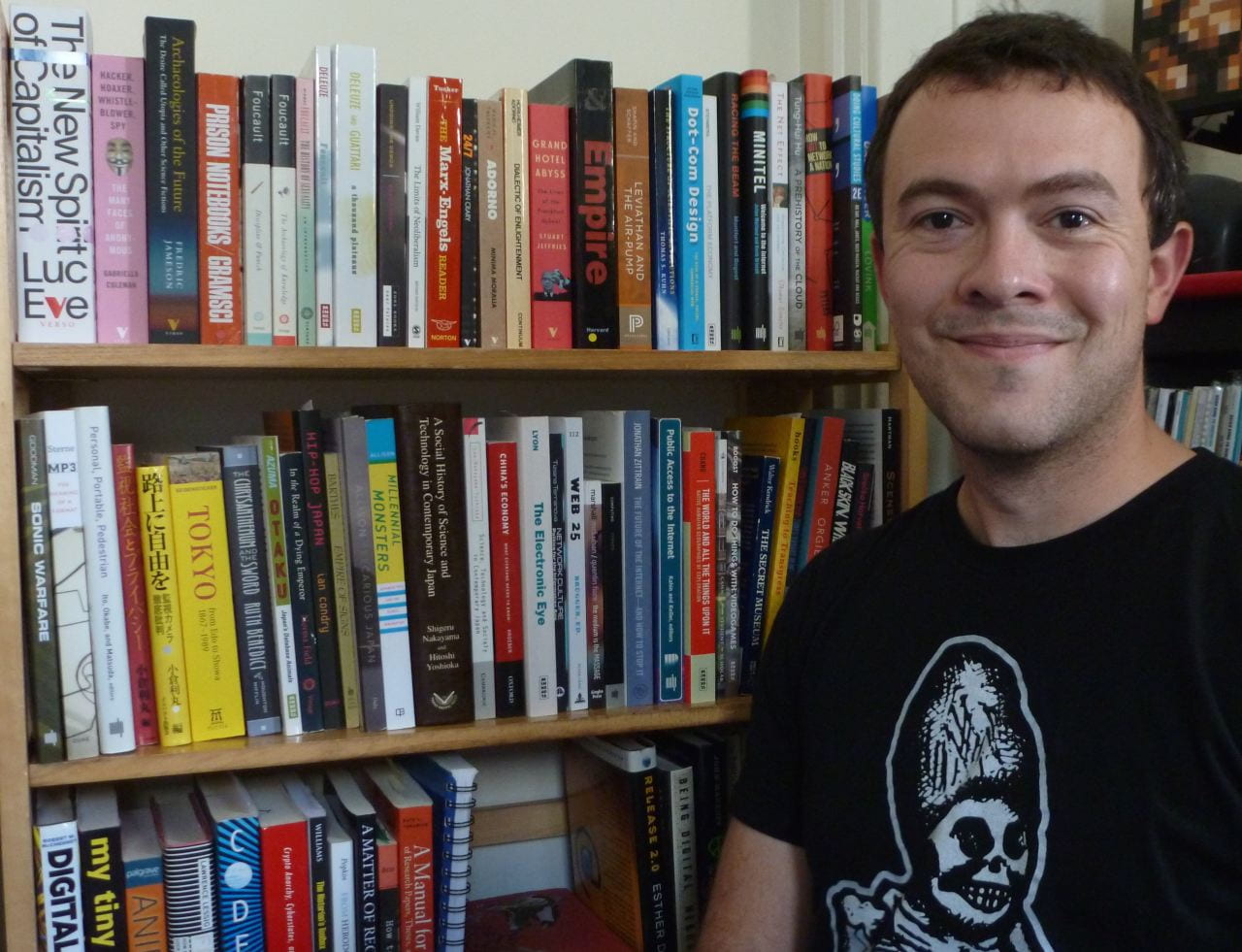
Spring Shelfie with Christopher St. Louis

I am a second-year PhD student in the media studies program in the School of Journalism and Communication. Prior to that, I earned two master’s degrees, the most recent also in the SOJC media studies program, where my thesis was concerned with the historical discursive construction of an idealized figure of the “Internet user,” and the first master’s degree from the University of Tokyo’s ITASIA program (https://itasia.iii.u-tokyo.ac.jp/), an interdisciplinary media and cultural studies program where I wrote my thesis on the news media’s role in producing narratives of risk to legitimize state programs of public surveillance.

My research interests involve a broad swath of topics, largely organized around the topics of Internet histories, mobile media, and the ideological and discursive constructions of new media. More specifically, I am interested in a recent shift from discussing the history of the Internet as a monolithic, American-focused narrative and instead exploring the plurality of global or regional Internet histories, with a particular (but not exclusive) interest in the Japanese Internet. I am also interested in how the development of the cellphone and smartphone factor into these histories and how contemporary mobile media is shaping the way we conceive of and interact with the Internet. Finally, combining these two strands is an interest in how these histories and the cultural meanings of these technologies are discursively constructed and shaped by embedded politics which in turn affect our experiences with new media.

My PhD research takes a historical and cultural approach to the keitai denwa, mobile phones popular in Japan from the late 1990s until the global diffusion of the iPhone and Android smartphones in 2007/2008. I view this period, which covers the early development of the mobile web with the launch of carrier NTT DoCoMo’s i-Mode service in 1999, as a time of “interpretive flexibility” for mobile media and the mobile web, where the cultural meanings of mobile technologies were still being discursively contested, standardized, and spread globally before the rise of the iPhone and Android smartphones fixed the dominant meanings of mobile phones and the mobile web within an appliancized framework governed by the logics of Web 2.0 ideology and surveillance capitalism.

I first came to the New Media and Culture Certificate program through the common seminar course taught in my first year by Professor Bish Sen. This was my first formal introduction to the study of new media (in all of its expansive forms, definitions, and approaches), and I still return to a significant number of the readings and topics we discussed in the class in my present work. The wider certificate program has been invaluable in helping me to connect with like-minded new media scholars in other departments across campus (whom I might not have run into otherwise), and the speakers invited to campus by the program have been inspiring both in the content of their research and the examples they provide of what a career as an academic specializing in new media studies could look like.

Recommended Readings

I could probably write several thousand words on readings that have had a strong influence on my research interests, my understanding of contemporary cultures, or my personal worldview. To narrow that range down somewhat, the following short list is a little thematically-scattered, but the readings have been influential in helping me think through some of the concepts I am working with for my dissertation and the orientation of my future research. These are works that explore the socially constructed nature of common technologies to show that artifacts and concepts we take for granted—the Internet, the abstraction of “the cloud,” urban infrastructure, hardware platforms like video game consoles, and even the tradition of scientific experimentation itself—are all products of culturally-produced meanings and embedded ideologies.

The Net Effect: Romanticism, Capitalism, and the Internet. Thomas Streeter. New York University Press, 2011

A Prehistory of the Cloud. Tung-Hui Hu. MIT Press, 2015.

“Do Artifacts Have Politics?” Langdon Winner. Daedalus 109 (1), 1980. http://www.jstor.org/stable/20024652

Racing the Beam: The Atari Video Computer System. Nick Montfort and Ian Bogost. MIT Press, 2009.

Leviathan and the Air-Pump: Hobbes, Boyle, and the Experimental Life. Steven Shapin and Simon Schaffer. Princeton University Press, 1985.

Recommended Tools

The tools we use as academics are important, not just in their functionality but in their embedded politics which we—knowingly or unknowingly—participate in through their use. When we produce and distribute knowledge, we might not think about whether private interests benefit from the work we do, or whether our choice of a particular program or file format possibly closes out other academics from engaging with our work because they don’t have the funding or access to specific technologies. The tools below have helped me through my graduate school journey, and I hope others may find some of them useful as well.

• Zotero (https://www.zotero.org/). A good reference manager is essential for 21st century academic work (in my opinion). Zotero is free and open source, compatible with Microsoft Word, LibreOffice Writer, and Google Docs (I think?) and runs on all major operating systems. Mendeley and EndNote are frequently recommended alternatives, but both are problematic in their default use of proprietary file formats; Mendeley is especially concerning considering it is owned by academic mega-publisher Elsevier.

• LibreOffice (https://www.libreoffice.org/). LibreOffice is free software that offers all of the features we expect from an office suite and is fully compatible with Word and Powerpoint (also Excel) formats. There’s no high cost (Microsoft Office), no concerns with storing important data in the cloud (Office 365, Google Docs) and no proprietary file formats that are incompatible with other programs (Apple Pages, Keynote).

• LaTeX (https://www.latex-project.org/). LaTeX is a collection of utilities used in producing high-quality typeset documents. It’s not the easiest thing to start using—but not much more complex than learning, say, HTML and CSS—but if typography is important to you then LaTeX is a valuable tool to learn. I typeset both of my master’s theses in LaTeX, and they look beautiful (the content, on the other hand…).

• Atom (https://atom.io). A multipurpose text editor developed by GitHub. A huge library of community-created plugins means this program can be adapted to just about any sort of writing project you’re working on. I use it to take notes and make outlines in Markdown format (https://daringfireball.net/projects/markdown/) which can then be easily converted into a number of other file formats using the pandoc tool (https://pandoc.org/). I also use it for editing LaTeX projects thanks to a number of useful features like syntax highlighting, bracket matching, and other nerdy stuff.

• Linux. Linux is a free operating system that runs on just about any modern laptop or desktop computer. I switched to Linux full-time from Microsoft Windows four years ago because I wanted more control over and customization of my computer, and being able to build my system around how I work has been an incredible asset to my productivity. There’s no one “version” of Linux; instead, it’s available in a number of different “distributions” which offer different collections of software, user interfaces, and other customizations. I use Fedora (https://getfedora.org) but Linux Mint (https://www.linuxmint.com/) and Ubuntu (https://ubuntu.com/) are also popular and accessible distributions for new users. If you’ve ever been frustrated at the way your computer operates—or the increasing ways in which you as the user have less control over how your operating system functions or is maintained and supported—Linux may be worth investigating.

Congratulations NMCC Graduates 2019!

This year the NMCC is celebrating three new graduates from the NMCC Certificate Program…

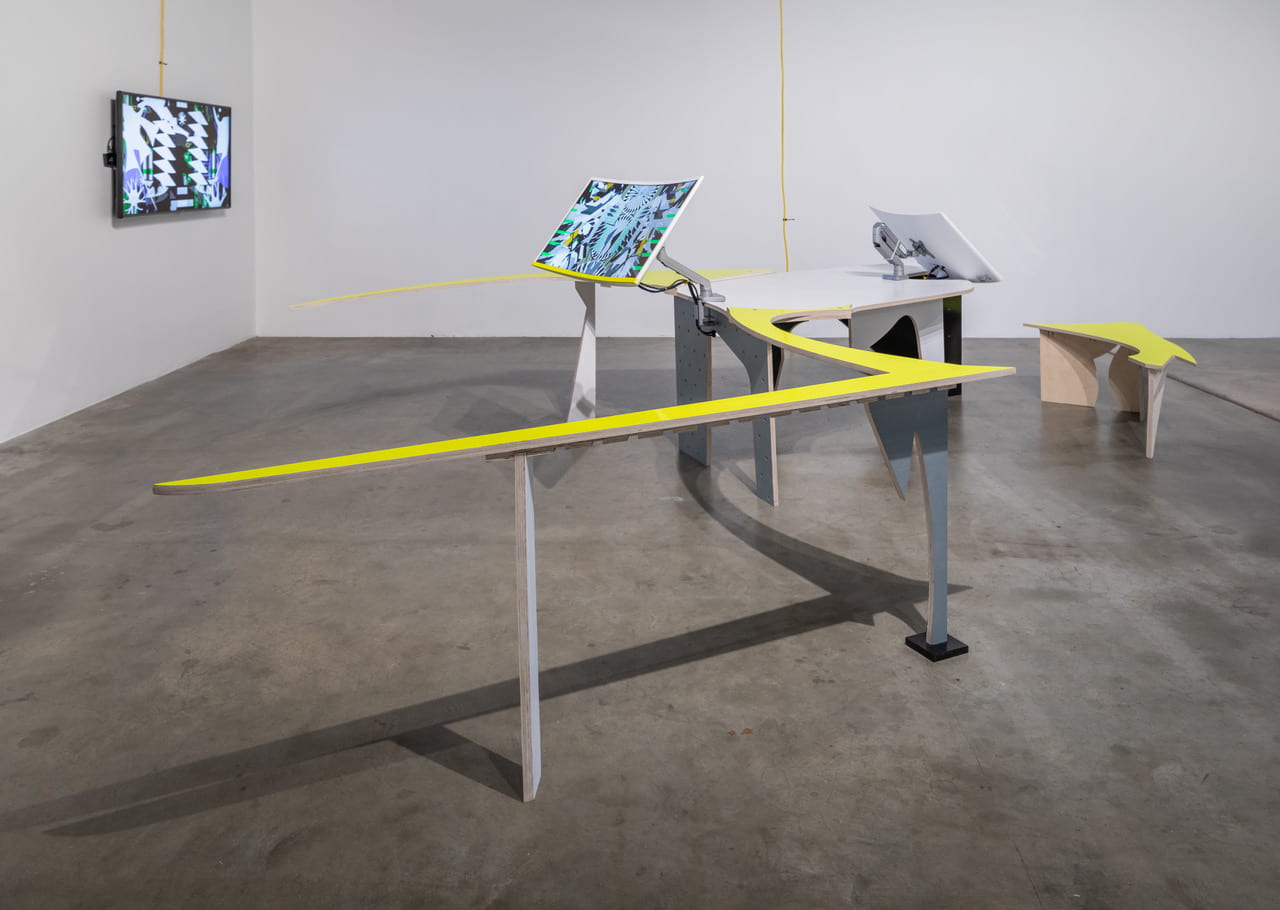
Aaron Whitney Bjork’s thesis exhibition titled Platform Bazaar was held at Disjecta Gallery in Portland, Or. May, 2019.

Aaron Bjork is graduating with an MFA in Fine Art from the College of Design.

His favorite NMCC Course was COLT 615: Transmedial Aesthetics with Dr. Michael Allan. After he graduates, he hopes to spend some time recuperating in the sun and seeing family.


Bonnie Sheehey is graduating with a PhD in Philosophy from the College of Arts and Sciences.
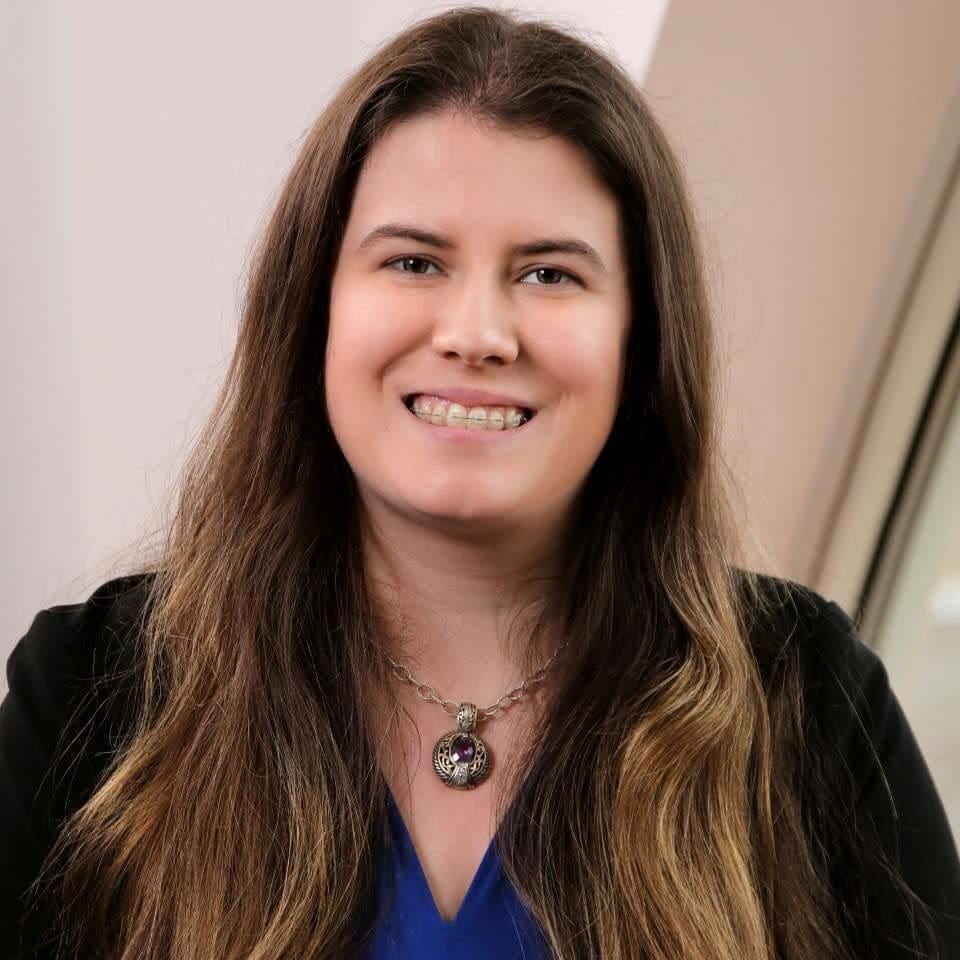
Her favorite class was also COLT 615: Transmedial Aesthetics with Dr. Allan. After graduating, she will begin a tenure-track Assistant Professor position in the Philosophy Department at Montana State University and continue research on the use of algorithms in the US criminal justice system.


Catharine Roner-Reiter is graduating with a JD from the University of Oregon School of Law and an MA from the Conflict and Dispute Resolution (CRES) program.

Her favorite class was J610: History and Theory of New Media. After graduation, she plans to pursue an LL.M in International Commercial Arbitration in order to work as an arbitrator in disputes involving the entertainment industry.


Save the Date for the NMCC’s Fall Open House

Joins us for snacks and drinks at the NMCC’s fall open house on Friday, October 18 from 3-5 in the Digital Scholarship’s DREAM lab!

Meet fellow certificate members and NMCC faculty, or say hello to those you already know. This event is open to anyone interested in learning more about the New Media and Culture Certificate program, so bring a friend.
We also want to hear about any suggestions you have for NMCC workshops, events, or speakers — so bring your ideas!